





Why glass restoration belongs before replacement
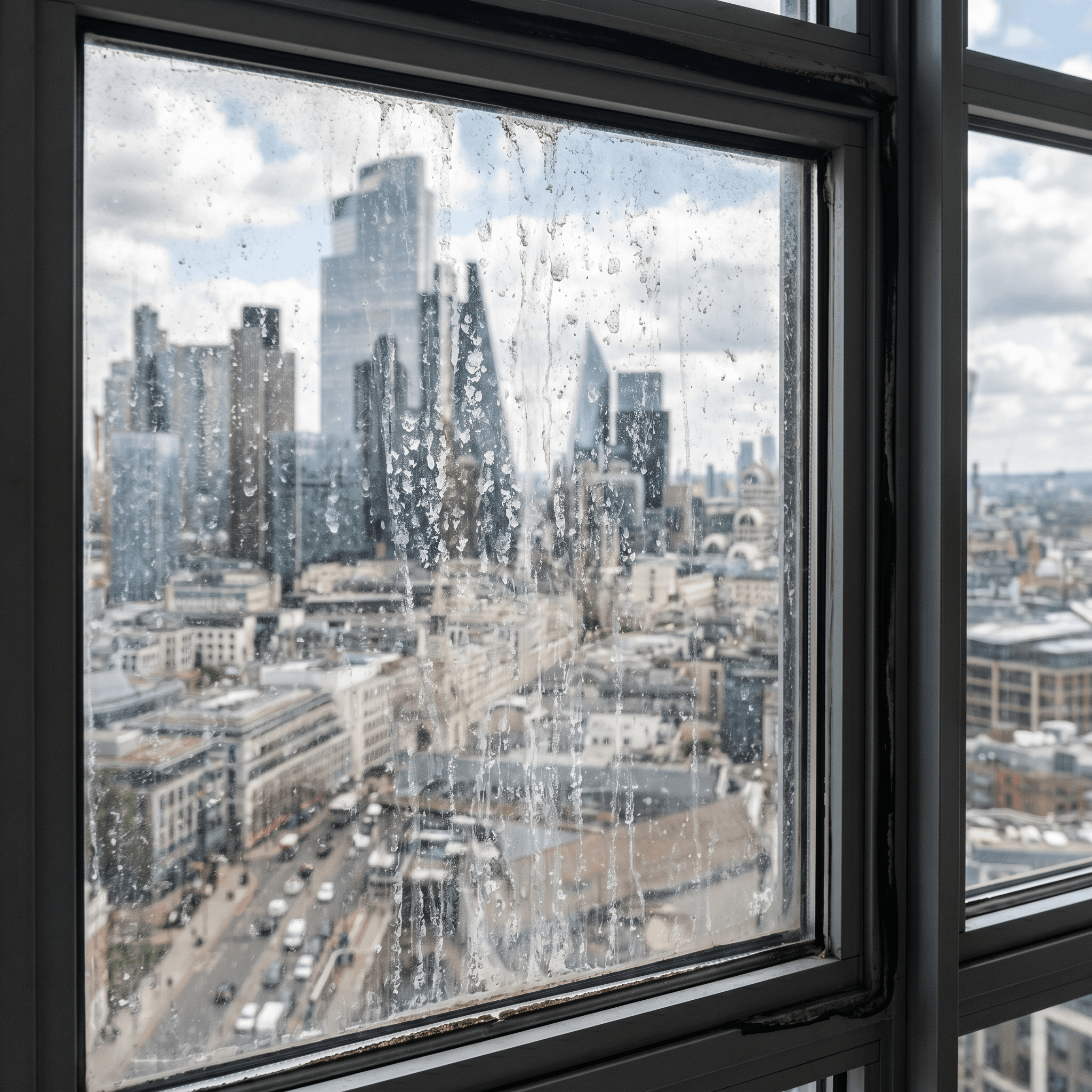
Why glass restoration belongs before replacement
When glass looks permanently cloudy, etched, or stained, the instinct is to replace it. It's also usually the wrong first move. Replacement is the most expensive, most disruptive option on the table — and in a large share of cases, it's solving a problem that restoration could have solved for a fraction of the cost.
Here's the case for trying restoration first.
What "damaged" glass usually actually is
Most glass that looks ruined isn't. What looks like permanent damage is typically surface buildup or early-stage etching:
- Hard-water mineral scale from sprinkler overspray, runoff, and rain — the most common culprit, and almost always removable.
- Construction debris — concrete splatter, mortar, sealant, and adhesive residue left during the build.
- Early-stage etching and oxidation — the beginning of mineral damage, often correctable before it sets permanently.
Genuinely unsalvageable glass — deep, set-in stage-five etching or physical cracks — is the exception, not the rule. But once it's been replaced, you'll never know whether it could have been saved.
Why restoration comes first
Cost. Restoration is dramatically cheaper than replacement — often by an order of magnitude. Replacing curtain-wall glass on a high-rise means new panes, access equipment, labor, and frequently a glazing contractor. Restoration is a cleaning and polishing process.
Disruption. Replacement means scaffolding, sealed-off floors, glazing crews, and tenants living next to an open facade. Restoration is done from rope or platform with no interior disruption.
Time. Restoration is measured in days. Replacement, especially with custom or insulated glass units, can mean weeks of lead time before a single pane arrives.
It's not always reversible the other way. You can always replace glass after attempting restoration. You can't un-replace it. Starting with the cheaper, less invasive option costs you nothing — if it doesn't work, replacement is still there.
How restoration works
The standard approach is mechanical polishing with cerium oxide — a fine compound that removes mineral deposits and light etching without damaging the glass. For surface scale, the process lifts the buildup; for early etching, it polishes the affected layer back to clarity. The result is glass that looks new, at restoration cost rather than replacement cost.
The bottom line
Replacement should be the answer when restoration genuinely can't recover the glass — not the default because someone assumed the damage was permanent. The right sequence is simple: assess the glass, attempt restoration, and replace only what truly can't be saved.
It's the first thing we evaluate when a building has glass that looks beyond help. More often than not, it isn't.