




A closer look at BMU design on modern towers
A closer look at BMU design on modern towers
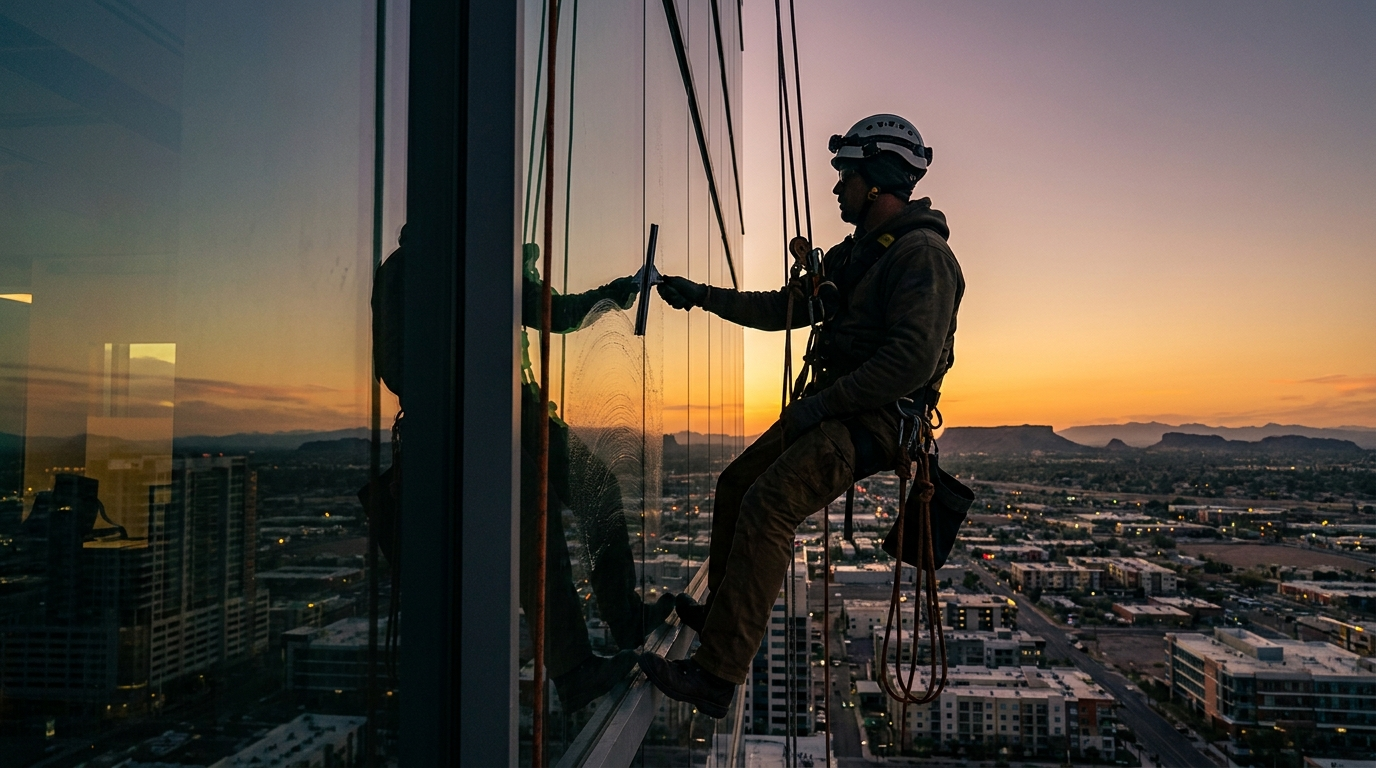
Walk past any new high-rise and look up. Somewhere near the roofline — often hidden behind a parapet — there's a machine that determines, more than almost anything else, how that building's glass will be cleaned for the next fifty years. It's called a Building Maintenance Unit, or BMU, and most people never notice it until it's the reason a job is easy or the reason it's a nightmare.
We work on towers across the spectrum: some with beautifully engineered BMUs, some with units that can't reach half the facade, and some with no permanent access system at all. The difference shows up in every cleaning, every inspection, and every line item of every proposal. So it's worth understanding what a BMU actually is, why modern building design has made them more complicated, and what owners and property managers should know before the glass ever needs attention.
What a BMU actually is
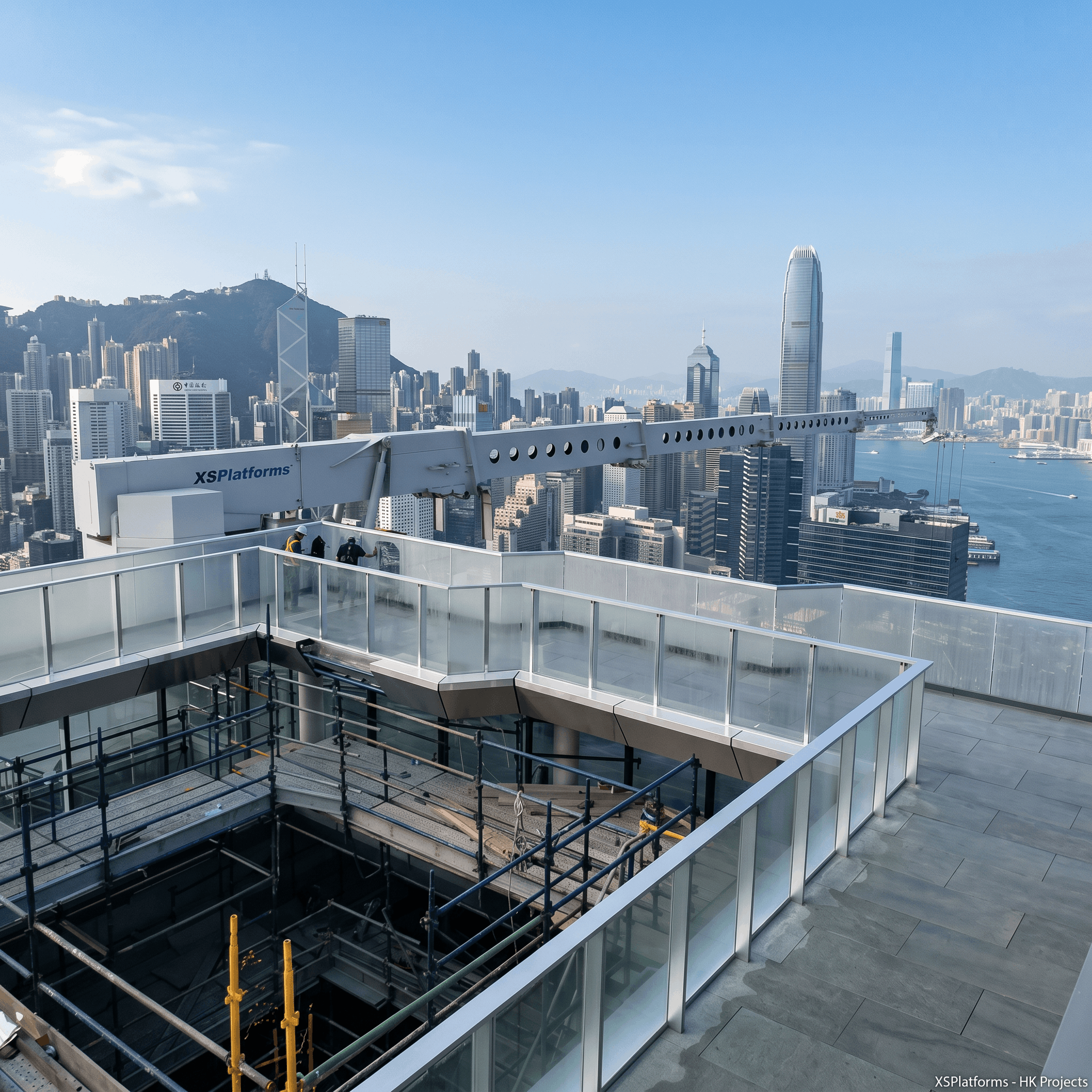
A BMU is a motorized, roof-mounted machine that lowers a suspended platform — a cradle — down the face of a building so crews can reach the glass. At its simplest, it's a jib arm on a track or turntable, a winch, wire ropes, and a cradle. The crew rides the cradle down the facade, cleans, and the machine moves them along to the next drop.
The category has grown well beyond that basic picture. The industry now distinguishes between rail-mounted units that travel along tracks on the roof, fixed units anchored to a single position, telescoping and luffing jibs that extend and pivot to reach around obstructions, and a newer generation of automated and robotic systems. The market for these machines is large and growing fast — driven almost entirely by the fact that buildings keep getting taller and more architecturally complex.
Why modern towers make this harder
Older towers were, broadly speaking, boxes. Flat curtain walls, regular window grids, predictable rooflines. A simple BMU could reach nearly everything.
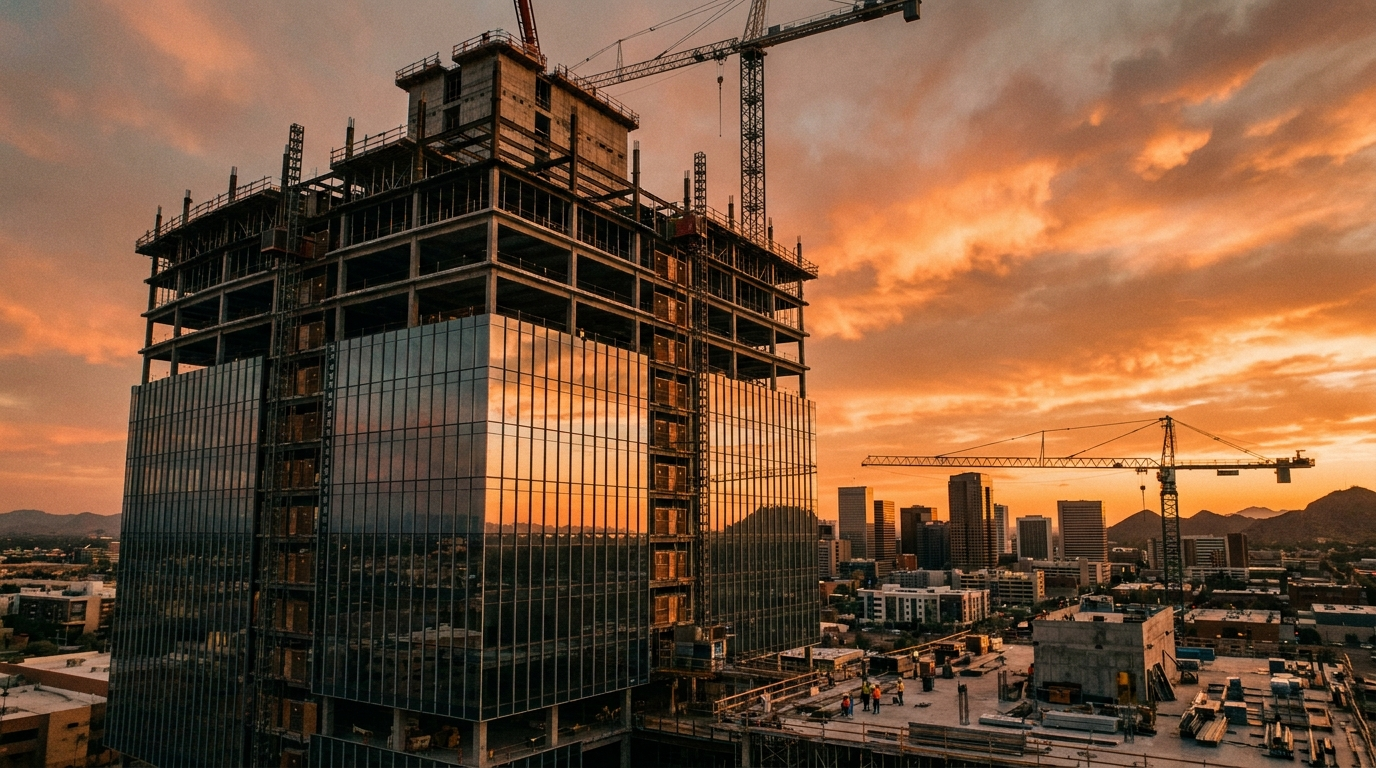
Modern towers are not boxes. Architects now design with setbacks, cantilevers, tapering profiles, crowns, fins, and sculptural geometry that looks stunning from the street and is genuinely difficult to reach from a fixed rooftop machine. A BMU that works perfectly on the north face may not be able to touch the inset balconies on the southeast corner. The taller and more distinctive the tower, the more likely it is that no single access method covers the whole envelope.
This is the core tension in modern facade maintenance: the buildings that are the most architecturally ambitious are often the hardest to keep clean, and the access system has to be planned for at design time — not bolted on after the building opens. When the BMU is an afterthought, the building owner inherits a permanent problem.
The technology is changing fast
The most visible recent development in this space happened in New York. Skyline Robotics, in conjunction with The Durst Organization and Palladium Window Solutions, deployed Ozmo — billed as the world's first robotic window-cleaning system — at 1133 Avenue of the Americas, a 45-story Class A office tower in the Bryant Park neighborhood. The system mounts a KUKA robotic arm to a cleaning platform and uses AI, machine learning, computer vision, and lidar to clean autonomously, while a human operator supervises from the rooftop. Robotics 24/7The Robot Report
What's notable for our purposes is how it works: Ozmo operates by using a building's existing maintenance units. In other words, the robot rides the BMU. The smarter the building's underlying access system, the more these emerging technologies can do with it. A well-designed BMU isn't just about today's cleaning crew — it's the foundation that future automation will depend on.
The pressure driving all of this is real. Roughly 70% of US window cleaners are over 40, and only about 9% are between 20 and 30, even as the appetite for taller towers shows no sign of slowing. Buildings are getting taller and harder to reach at the same moment the skilled-labor pool is shrinking. Design and technology are both racing to catch up.
Why this matters before the glass is dirty
In cities like New York, BMU systems aren't optional and they aren't unregulated. Wire-rope systems must follow rules set by the NYC Department of Buildings and OSHA, including daily visual inspections before use, detailed monthly inspections by a qualified provider, annual certification by a licensed third party, and special inspections after severe weather or high winds. A neglected BMU isn't just an inconvenience — it's a compliance and liability exposure.
For an owner or property manager, the practical takeaways are straightforward:
A BMU is a long-term decision, not a maintenance detail. The access system designed into a building shapes the cost, frequency, and quality of every cleaning for decades. Cutting corners at design time produces a building that's expensive and difficult to maintain forever.
Coverage matters more than capability. A powerful BMU that can't reach a third of the facade still leaves a third of the facade to be cleaned some other way — by rope access, by swing stage, or by a hybrid program. Understanding the gaps in your building's coverage is the first step to maintaining it well.
The right partner reads the building first. Before anyone touches the glass, the building itself dictates the method. A facade with full BMU coverage gets cleaned one way; a facade the BMU can't fully reach gets cleaned another. Matching the method to the building — rather than forcing every building through one approach — is the entire job.
The bottom line
A BMU is one of the quietest, least-celebrated pieces of engineering on any tower. It's also one of the most consequential. As buildings get taller and more sculptural, and as automation begins to ride these systems rather than replace them, the quality of a building's access design will only matter more.
If you're not sure what your building's BMU can and can't reach — or whether it has one at all — that's worth knowing before the next cleaning, not during it. It's the first thing we look at on every site walk.